The notification pings. Another video lands in your feed. You tap play, expecting the usual corporate slideshow or talking head against a white wall. Instead, you’re watching something that feels different. The lighting draws you in. The camera moves with purpose. The sound makes you lean closer.
Five minutes later, you realise you’ve watched the entire thing. Without skipping. Without checking your phone. You have given that brand your most precious resource, your time.
That’s the power of cinematic video. It transforms ordinary content into something your audience actually wants to watch. But creating that magic requires understanding what cinematic actually means beyond the technical buzzwords and expensive equipment lists.
Understanding Cinematic Video Beyond the Gear Lists
Walk into any production meeting and someone will mention “making it look cinematic.” They usually mean shallow depth of field, slow motion, and expensive colour grading. These techniques can create beautiful footage, but they miss the fundamental point.
Cinematic video isn’t about replicating the look of Hollywood films. It’s about borrowing the storytelling principles that make films impossible to ignore.
Real cinematic video understands something most marketing content doesn’t: your audience can sense when you respect their intelligence and time. They can also sense when you don’t.
The equipment obsession
Your smartphone probably shoots higher resolution images than the cameras used for Jaws or The Godfather. The difference between amateur and professional results isn’t the gear. It’s understanding how to use whatever tools you have to serve your story and audience.
We’ve seen remarkable cinematic results created with basic equipment and clear thinking. We’ve also seen expensive productions that looked technically perfect but failed to connect with anyone. The camera doesn’t determine impact. The strategy behind it does.

The copy-paste problem
Seeing a technique work brilliantly in one context doesn’t mean it will work in yours. That dreamy, slow-motion shot might be perfect for a luxury car commercial but completely wrong for explaining your software solution.
Effective cinematic choices serve your specific message and audience. What works for one brand might undermine another entirely.
Practical Steps to Cinematic Results
Creating cinematic video starts with mastering the fundamentals that actually matter to your audience.
Light shapes everything

Good lighting transforms any footage, regardless of camera quality. Natural light near windows during golden hour often outperforms expensive studio setups. The secret isn’t having more lights but understanding how to work with the light available to you.
One well-positioned key light creates depth and drama that flat, even lighting can’t match. Even if you’re filming with your phone, spending five minutes finding better light will dramatically improve your results.
Even interview setups can be cinematic, if you’re happy spending hours lighting it. If you want to be cinematic, there is no such thing as “doing a quick interview”. You need to paint the interview with light that reflects the mood and tone of the subject that is being discussed.
Movement with meaning
Every camera movement should answer a simple question: what does this add to the story? Slow movements can build anticipation. Quick movements create energy. Static shots suggest stability and control.
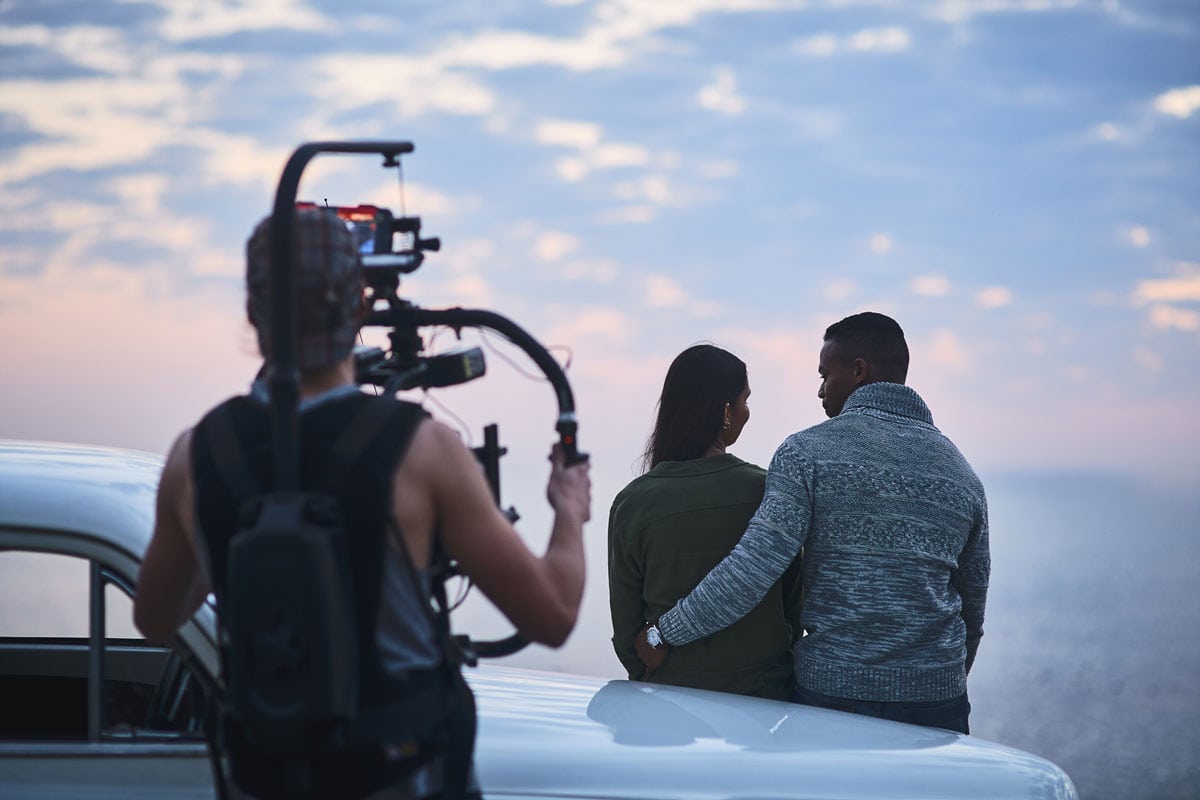
You don’t need expensive equipment for effective movement. Walking smoothly while filming creates engaging motion. A camera jib and dolly provides professional-looking camera moves. Even thoughtful panning from a tripod adds visual interest when done purposefully.
Sound design that serves the story
Audio quality often determines whether footage feels professional or amateur. Your audience will forgive slightly soft focus but won’t tolerate unclear dialogue or overwhelming background music.
Professional sound doesn’t require the most expensive equipment. It requires understanding what your audience needs to hear clearly. Sometimes that’s crystal-clear dialogue. Sometimes it’s subtle ambient sound that sets the mood.
Imagine ASMR levels of sound as a character walks across wooden floorboards or shaves with a cut throat razor.
Colour that communicates
Colour choices tell stories before any dialogue begins. Warm tones suggest comfort and emotion. Cool tones create distance or tension. Slightly desaturated colours often feel more cinematic than bright, punchy ones.
The best colour choices support your specific message. A children’s charity might benefit from bright, hopeful colours. A serious documentary might require more muted, realistic tones. The technique should always serve your content, not the other way around.
What Cinematic Video Actually Means
Strip away the marketing nonsense and cinematic video becomes simple: using film techniques to create content your audience actually wants to watch.
Real cinematic video borrows from filmmaking because films understand something most marketing content doesn’t. Audiences are smart. They can tell when you respect their time and intelligence. They can also tell when you don’t.
The difference between cinematic style and cinematic impact is crucial. Style gets you a few seconds of attention before people scroll past. Impact changes how they think, feel, or act.
We’ve worked with organisations who invested heavily in videos that look cinematic but struggle to achieve their goals. The technique should serve the audience, not impress other video producers.
Be careful you don’t give away a big chunk of marketing budget to a filmmaker who just wants to make pretty pictures, and does, but with little positive impact to your objectives.
The Building Blocks of Effective Cinematic Video
Composition that guides attention
Strong composition directs your viewer’s eye exactly where you want it to go. The rule of thirds provides a helpful starting point, but the most engaging shots often break conventional rules purposefully.
Leading lines draw attention through your frame. Symmetry suggests order and calm. Asymmetry creates visual tension and energy. The key is choosing compositions that support what you’re trying to communicate.
Strategic camera movement
Every movement should feel intentional and serve your narrative. Slow zooms can build suspense by gradually revealing information. Quick cuts create urgency during action sequences. Static shots provide stability during emotional moments.
For organisations working in sensitive sectors, movement choices become particularly important. Healthcare video production often benefits from calm, steady movements that build trust and confidence rather than dynamic shots that might feel unsettling.
Editing rhythm that matches your message
The pace of your editing determines how your audience experiences your content. Fast cuts work well for energetic, action-oriented content. Longer takes allow emotions to develop and build naturally.
Your editing rhythm should always serve your message rather than showcasing technical skills. The goal is creating an experience that feels natural and engaging to your specific audience.
Stories worth the audience’s time
This element determines whether all your technical craft actually matters. Without compelling storytelling, even the most beautiful footage struggles to hold attention.
Understanding the fundamentals of video storytelling helps you structure content that keeps audiences engaged from opening frame to final call-to-action. Research from the Content Marketing Institute shows that story-driven content increases engagement rates by up to 300% compared to purely informational approaches.
Start with understanding what matters to your audience, then choose cinematic techniques that help you communicate those ideas effectively.
Why Cinematic Quality Matters for Your Organisation
Your audience encounters thousands of videos every week. Most disappear into the endless stream of content competing for attention. Cinematic quality helps yours stand out, but only when it serves a clear purpose.
The most effective approach combines visual appeal with strategic thinking. Every cinematic choice should support your broader communication goals, whether that’s building trust, explaining complex ideas, or inspiring specific actions.
This strategic approach proves particularly powerful in sectors where emotional connection drives decision-making. Charity video production demonstrates how cinematic techniques can transform abstract causes into personal, urgent stories that motivate donors to act.
But cinematic techniques aren’t automatically better for every situation or even your budget. Sometimes direct, simple communication serves your audience better than elaborate visual storytelling. The approach should always serve your audience’s needs rather than impressing other video creators.
Our Approach to Cinematic Video Creation
Research drives creativity
We begin every project by understanding your audience deeply. What captures their attention? What would make them stop scrolling and genuinely engage with your content?
This research phase might reveal that cinematic video perfectly serves your goals. It might also suggest that a different approach would work better. Our job is recommending what actually works for your specific situation, not what looks most impressive.
Substance guides style
Every visual choice we make serves your strategic goals. Lighting creates the right emotional context for your message. Camera movements guide attention where it needs to go. Editing pace supports the experience you want to create.
We don’t add cinematic techniques because they look professional. We use them when they help achieve your specific objectives more effectively.
Multiple approaches, tested results
We develop several different creative directions before choosing the final approach. The first idea might work well, but exploring alternatives often reveals even better solutions.
Testing these approaches with representatives from your target audience shows which direction actually resonates, not just which one appears most sophisticated to industry professionals.
Quality that respects your investment
Creating effective cinematic video requires time, attention, and expertise. Rushing the process or cutting corners typically shows in the final result, undermining your investment and your audience’s experience.
This doesn’t necessarily mean huge budgets or lengthy timelines. It means applying the right level of craft and care to match your goals and audience expectations.
Learning from Practice: A Boxing Video Case Study

A boxing promoter approached us with an interesting challenge. Boxing often gets perceived as purely brutal, but the sport involves tremendous artistry, discipline, and strategy. How could video help people appreciate these less visible aspects?
Standard highlight reels wouldn’t work; they’d reinforce existing perceptions about violence and aggression. We wanted to focus on the why.
Our solution involved contrasting two distinct visual styles within the same video. This contrast would mirror the sport itself: controlled preparation meeting spontaneous action.
Planned sequences used dramatic lighting to showcase the artistry most people never see. We filmed training sessions with single key lights, creating shadows and depth that suggested classic boxing photography. Every movement was deliberate and controlled.
Documentary-style footage captured the authentic energy of actual competition. Handheld cameras moved with the action. Natural lighting couldn’t be controlled but added realism. These moments couldn’t be planned or repeated.
The contrast between these approaches helped viewers understand boxing’s dual nature: technical precision combined with explosive unpredictability.
Preparation enabled success
We storyboarded every planned shot before arriving at the gym. Time with professional athletes is precious and tightly scheduled. Having a clear plan meant we could work efficiently without wasting anyone’s time.
This systematic approach applies regardless of the sector. Whether filming in boxing gyms or creating educational video production content in classrooms, thorough preparation ensures every minute on location delivers maximum value.
Equipment choices supported creative goals
We selected a 5K Red Scarlet camera for its flexibility rather than its prestige. High frame rates enabled slow motion sequences that revealed details impossible to see at normal speed. The camera delivered quality that worked equally well on smartphones and large screens.
Post-production brought everything together
An editor who wasn’t present during filming selected music and determined pacing. Sometimes objectivity from the production process leads to better creative decisions than being attached to how difficult certain shots were to achieve.
Colour grading created the final emotional layer. We chose a slightly faded aesthetic that evoked authentic boxing venues where most fighters develop their skills. This wasn’t about making footage look beautiful but about creating specific emotional associations.
The finished video helped viewers feel the passion behind the sport, respect the artistry involved, and understand why he boxes. That’s cinematic impact: using film techniques to shift perceptions and create genuine connection.
Creating Video That Genuinely Connects
Your audience’s time remains precious and limited. Every video you create either honours that time or squanders it. Cinematic techniques give you powerful tools for creating content worth watching, but only when applied thoughtfully to serve clear purposes.
The most successful cinematic videos combine visual appeal with strategic thinking. They use film techniques not to look impressive but to communicate more effectively with specific audiences about specific goals.
We help organisations that want to create positive change communicate their message through video that actually works. Whether you’re ready to explore cinematic techniques yourself or considering professional collaboration, success begins with understanding your audience’s world.
Book a creative consultation to discuss how cinematic video might serve your specific objectives. See examples of our work through our showreel. Download our guide to planning video content that drives measurable results.
Your audience deserves content that respects their attention and serves their interests. When you get that balance right, the results speak for themselves.